How I use Sunsama to manage my time
How I landed on Sunsama after Claude and Morgen didn't stick, and why the daily plan and shutdown ritual mattered more than the tool.
I’ve always used Linear for my work-related tasks. Having a good habit of tracking my work through Linear meant I wouldn’t forget bugs and could keep a history of what I did as well as how I fixed things.
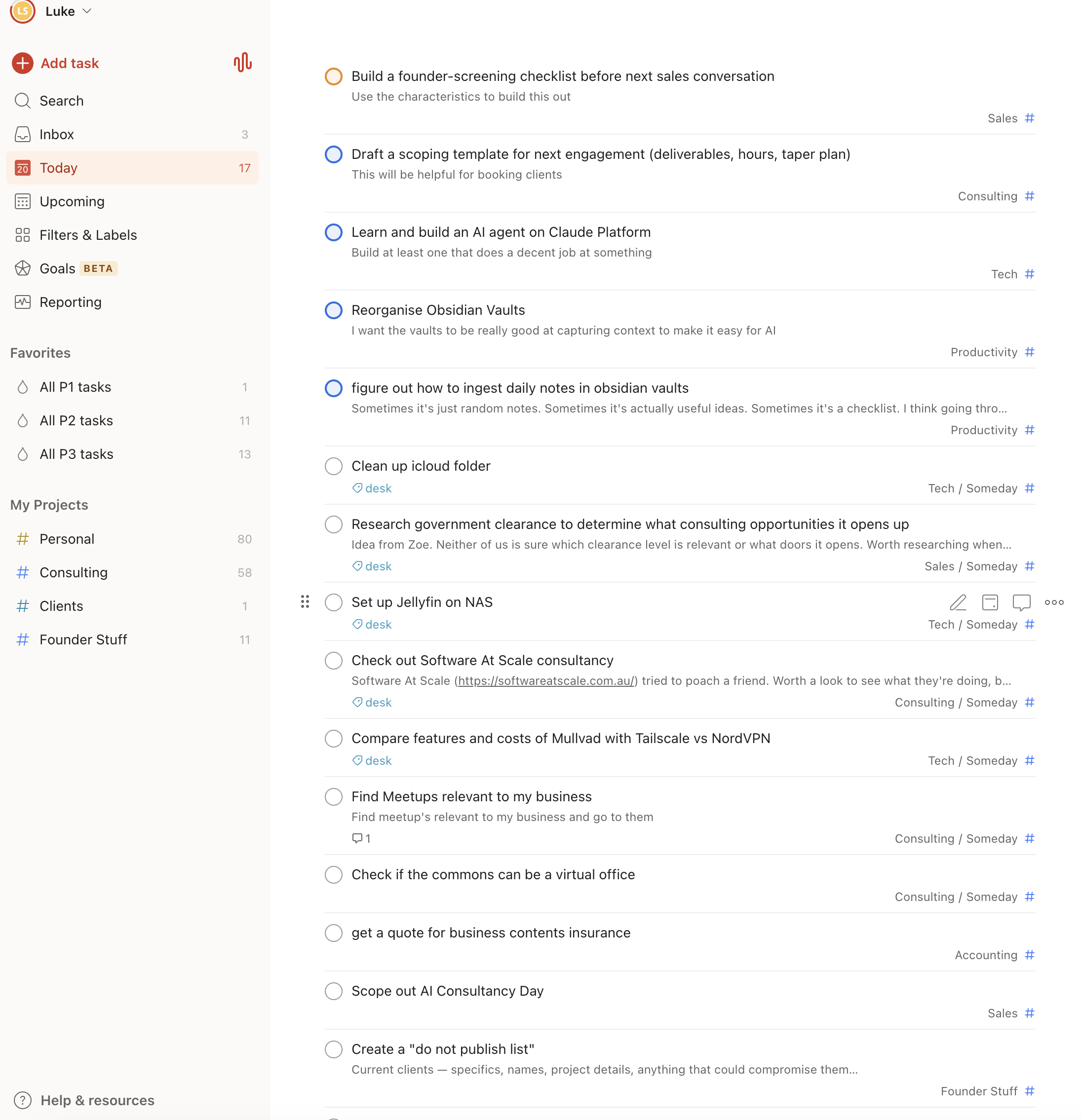
I took this habit into using Todoist when I started being a consultant. I like Todoist over Linear as Linear feels too specific to software development whereas Todoist is meant to just “capture todos”. I went ham on organising my projects and I still use Todoist for capturing all of my “inbox” tasks. I go through the inbox each day, and my backlog on Friday. This means that my tasks are up to date and prioritised well.
Where it broke down
The thing is, I often will put too much into my day and can’t actually accomplish it all. I found that when I work on clients’ work, they have their own ticket tracking. I also realised that I wasn’t taking into consideration meetings and other things I had already committed to. This was making me anxious each day because I was biting off more than I could chew!
What I tried first
This is where I started looking for tools that could help me. I had heard time-boxing was a great process.
I went down the time-boxing hole and thought I could solve this with AI. I tried using Claude to schedule my day and go through my priorities, but the interface wasn’t great (I don’t really like chatting with an AI to organise my day. I’d rather do it quickly myself).
I then tried using Morgen as it had an AI scheduling feature. The issue with Morgen is that the integration between it and Todoist sucked. You couldn’t easily change the default estimation of how long things take and it would just put everything in at 30 minutes. Morgen also sucked at mapping its priorities to Todoist’s. Again, this just meant I wasn’t getting the full benefit of using its AI scheduling features at all.
I then started searching again, and came across Sunsama. I had used Sunsama last year but I found their mobile app to be really crap (which it still is). Since I use Todoist for most of my backlog, I didn’t need Sunsama as a mobile app that often. I decided to give Sunsama another go.
Why it works for me
What I like about Sunsama is that it doesn’t get AI to figure out your priorities or how to structure your day. You have to do that yourself. It also forces you into building the long-lasting habits that actually work. Planning your day each morning and having a shutdown at night are great habits!
Using AI to help you learn and build habits is how I like to use it. I don’t think that AI can plan my day, but I do think it can get me to make the judgement calls that help me form good habits so that I can plan my day myself. I think Sunsama is a great tool for creating those habits and they only sprinkle in AI where necessary (things that are genuinely easy for AI to get right and useful).
My habits aren’t all there yet. I’m still getting the hang of weekly objectives and weekly planning, but it’s coming along. I had stumbled with choosing what my objectives should be as my week often changes and it’s hard to plan. But hopefully I can start to get into more long-term thinking as things settle a bit.
My setup
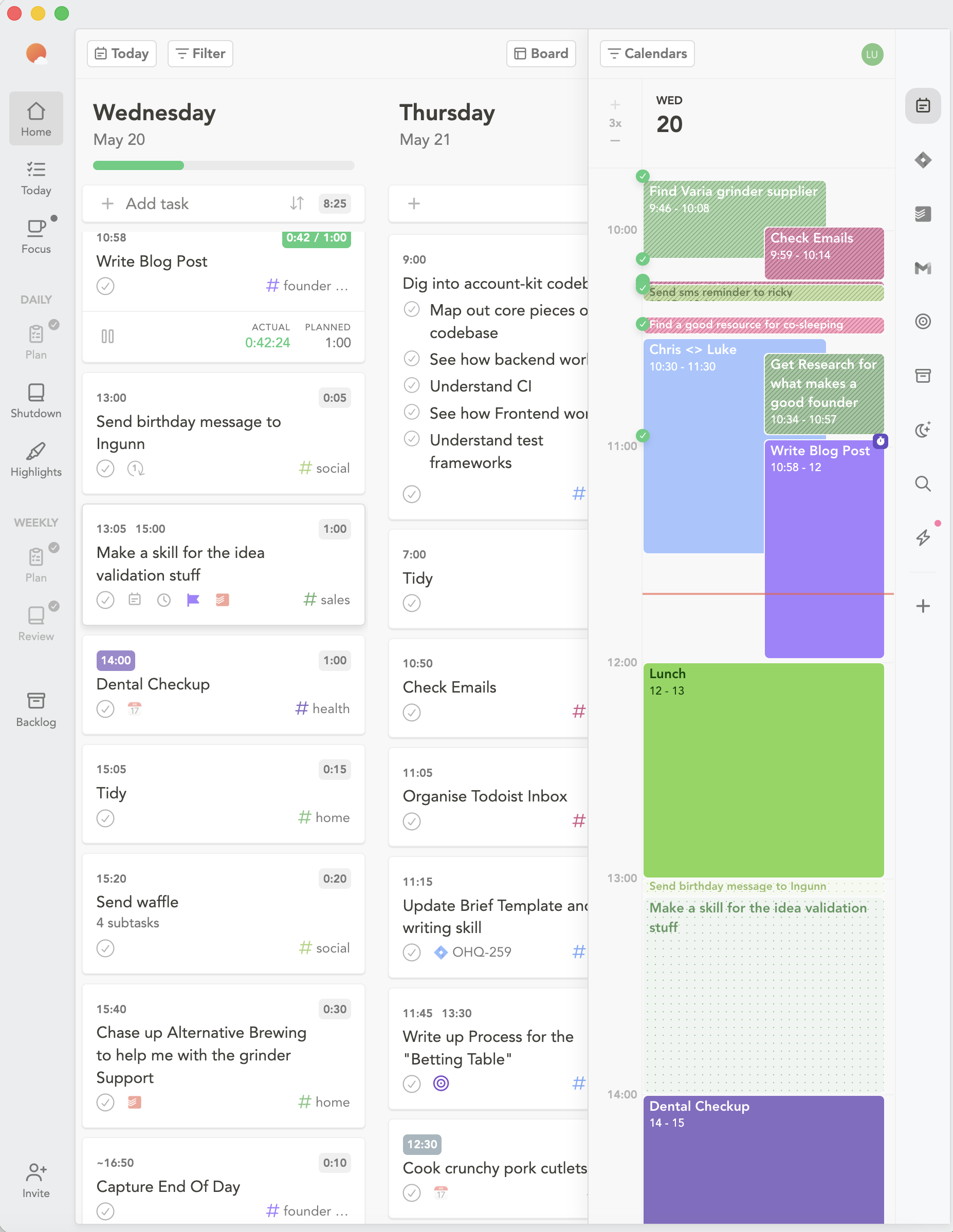
My current Sunsama setup is like this:
- I’ve connected all of my calendars (personal, work and clients).
- I’ve connected all of my task backlogs (Jira, Linear, Todoist).
- I’ve got a morning ritual at 9am to plan my day. I turn on the automatic triggering for the daily planning so that Sunsama opens into it each morning.
- I turn on the automated daily shutdown so that I can capture what I did for the day as well.
- I started planning my week on Sunday night. This is after I’ve reviewed my week on Friday arvo and gone through my Todoist backlog.
- I make sure that the time-boxing is visualised on my calendar so I can see where things will go and that my day isn’t totally cooked.
- I keep a custom schedule for my personal stuff. This is because I tend to do them outside of work hours. That’s why my day on Sunsama starts at 7am and goes until 9pm.
- I heavily use the focus timer. This means I can capture how long I actually spent on something and if I’m actually good at estimating my time (I’m not!).
- I use their AI for giving me channel and time recommendations. This is a great use of AI. It’s sprinkled in but doesn’t automate everything.
- I have a LOT of channels and contexts. I don’t know if it’s helpful or not, but I figured I’d rather put things into buckets I can use in my weekly planning to see if things align or not.
- My current contexts are: clients, consulting, founder stuff, and personal.
- Personal has the most channels with things like “family”, “finance”, “health”, “hobbies”, “home” and “social”. I’m still seeing if this is useful or not but I genuinely have goals in each one of these.
What sucks about it
Things that suck with Sunsama:
- It’s really bad at being a backlog. They admit this and say “don’t use our backlog for heaps of tasks”. I agree completely. Get Linear, Todoist, or something else to actually manage what you want to do and your concrete tasks.
- It sucks at calendars. It can’t really add meetings or manage invitees. You should make sure to continue to use your normal calendar applications.
- Their mobile app dies from performance issues and I’m on the iPhone 16 Pro Max. I’ve submitted a bug report, but I don’t see them doing much about it.
- Sometimes it doesn’t see all of my Todoist tasks. You’ll need to just add the task directly from a Todoist url into Sunsama. Bugs. They happen.
Where I’ve landed
Overall, time-boxing my time and locking in specific tasks each day has been great. I really see the benefit from my daily planning and shutdown. I feel so much better than previously, and I feel like I’m moving things forward each day.
So what
What I was actually missing wasn’t a tool to solve my overscheduling issues and make me more productive. It was a habit of planning my day and being deliberate about where I spend my time. You don’t need Sunsama to do this, but damn if it isn’t helpful!
I also especially love the email newsletters I’m getting from Ashutosh Priyadarshy. He’s really good at sharing tips, keeping things calm, and changing the way we think about productivity. Highly recommend giving his emails a read (which you’ll receive if you sign up).
If you want a free month and are thinking about trying Sunsama, here’s a link for you: https://sunsama.com/share?refId=69e56ff274edf50001efd9e5